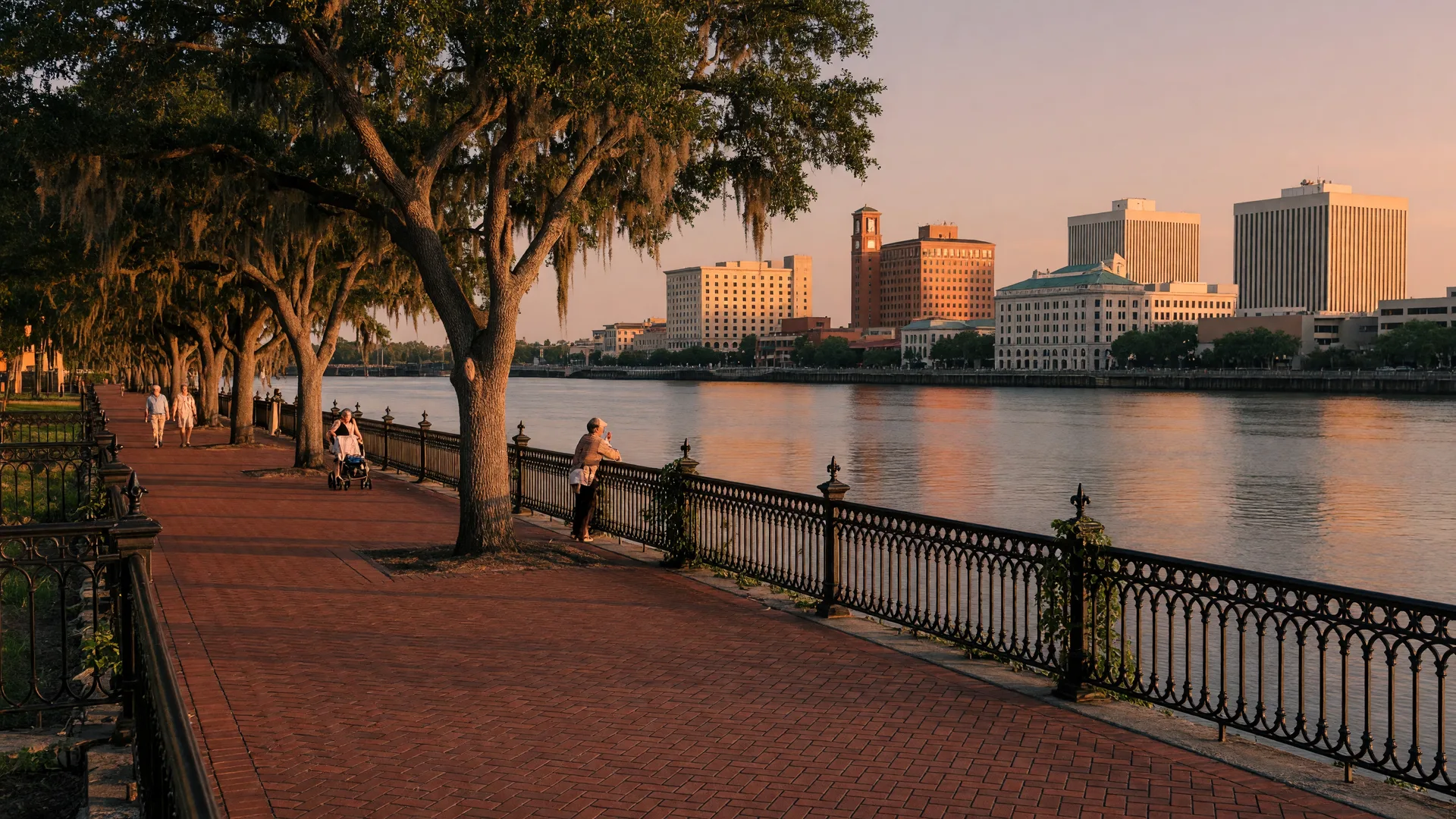
Richmond County · The Historic Heartland · The Garden City of the South
Augusta GA City Guide
Search the Augusta guide
59 entries in the Augusta guide, indexed at build time.
Search all of GeorgiaExplore riverfront walks, local food, arts, outdoor adventures and things to do in Augusta, Georgia: the Riverwalk, the canal, Phinizy Swamp, the museums, and the living conversation in Richmond County.
The Augusta guide on CityGuideGA is written for residents, new residents, families, students, relocators, home buyers, and weekend visitors. It is an independent local discovery resource, not a real-estate tour and not an Augusta National visitor guide: the Masters gets one honest section, and the course is private.
Augusta at a glance
The Garden City, in one paragraph
Augusta sits on the fall line of the Savannah River, the seat of Richmond County and one of Georgia's oldest cities, founded in 1736 and named for Princess Augusta. It earned the nickname "the Garden City of the South" in the early 1900s for its large private gardens, and it is known worldwide for one week in April: the Masters at Augusta National.
The rest of the year runs on the riverfront, the 1845 canal, the museums, and a medical and university economy anchored by Augusta University, Piedmont Augusta, and Wellstar MCG Health. Augusta and Richmond County share one consolidated city-county government, approved by referendum in 1995 and in effect since 1996, so the county seat and the city are the same government. The Richmond County guide carries the county overview.
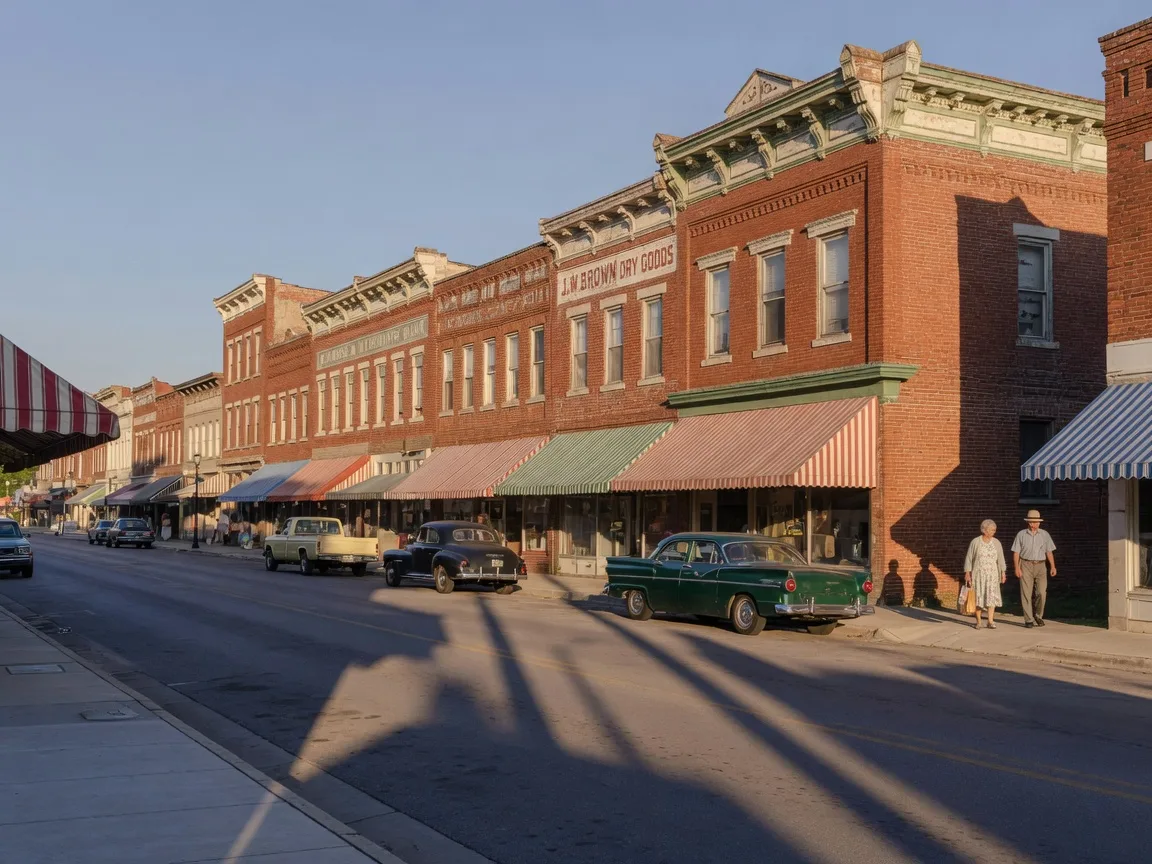
Broad Street and the river
Downtown Augusta is Broad Street: two- and three-story brick storefronts, the theaters, the restaurants, and the Riverwalk a block away at the bottom of the bluff. The state line is close, so Evans and Martinez (Columbia County, Georgia) and North Augusta (South Carolina) are all part of the same daily geography.
The story of Augusta
History of Augusta
Augusta is the second oldest city in Georgia, founded in 1736 when James Oglethorpe sent a party up the Savannah River to build a settlement at the head of navigation. It was named for the bride of Frederick Louis, Prince of Wales.
The fall line location made it a trading city: cotton moved downriver, and after the Augusta Canal opened in 1847 the city became one of the world's great inland cotton markets. The Medical Academy, authorized in 1828, grew into the Medical College of Georgia and today's Augusta University.
Augusta today is the river city of the fall line: the Canal, the Riverwalk, the Masters each spring, and the medical and cyber industries that anchor its modern economy.
Things to do in Augusta
The anchors of an Augusta visit
Augusta's major draws are the riverfront, the canal, the swamp, and the museums, all within a short walk or drive of downtown. These are real, open places; hours and tickets change, so check before you go. The full list lives on the Augusta things-to-do page.
Augusta Riverwalk
The brick promenade along the Savannah below the downtown bluffs, with fountains, gardens, and the Jessye Norman Amphitheater.
See all things to doAugusta Canal National Heritage Area
The 1845 industrial canal with free towpath trails and the Discovery Center at Enterprise Mill.
See all things to doPhinizy Swamp Nature Park
Free boardwalks through a 1,100-acre urban wetland, open daily from dawn to dusk.
See all things to doMorris Museum of Art
The museum devoted to the art of the American South, on the Riverwalk at 1 10th Street.
See all things to doAugusta Museum of History
The city history museum with the permanent James Brown: The Godfather of Soul exhibit.
See all things to doSacred Heart Cultural Center
The 1897 former church on Greene Street, free to visit on weekdays.
See all things to doRestaurants in Augusta
Augusta's dining, district by district
Augusta's restaurant scene runs from the Broad Street tables downtown to the Summerville rooms on Highland Avenue and Walton Way. The city's restaurant list names only real, open places, tagged by district and the kind of meal, from date night to a quick lunch.
The full Augusta restaurant listCoffee, breakfast and brunch
The coffee counters and brunch rooms
Augusta runs on coffee: the downtown counters on Broad Street, the roaster room on Central Avenue, and the cafes of the Laney Walker and Summerville edges. The city's coffee and breakfast page carries the verified counters, and Toaste handles the weekend brunch line on Broad Street.
The Augusta coffee and breakfast listAugusta date night
An evening in Augusta
Augusta date nights usually start with a table and end with a show, because the downtown rooms are close enough to do both in one night: dinner on Broad Street or in Summerville, a performance at the Miller Theater or the Imperial Theatre, and a slow walk on the Riverwalk. The city's date-night page carries the evening list.
The Augusta date-night listParks and outdoor activities
The green side of Augusta
Augusta's outdoor life is anchored by the Riverwalk, the canal towpath, and Phinizy Swamp, with neighborhood parks spread across the county. These are real parks with real addresses; hours and trail conditions change, so confirm before you drive. The full list is on the Augusta parks and outdoors page.
Phinizy Swamp Nature Park
Free boardwalks through a 1,100-acre urban wetland, open daily from dawn to dusk.
See Augusta parksAugusta Canal towpath trails
The free walking and biking trails along the 1845 canal, from downtown north.
See Augusta parksAugusta Riverwalk
The brick promenade along the Savannah, with fountains, gardens, and the amphitheater.
See Augusta parksPendleton King Park
The historic park on Troupe Street with gardens, walking paths, and disc golf.
See Augusta parksBrookfield Park
The west-side park with a dog park, playgrounds, and walking trails.
See Augusta parksBrick Pond Park
The wetland boardwalk park across the river in North Augusta, South Carolina.
See Augusta parksFamily activities and rainy-day options
The rooms and parks for the under-12 crowd
Augusta families run on the swamp, the museum, the canal, and the trampoline parks, with GreenJackets baseball across the river for the summer evenings. The family activities page carries the verified list, real and open only.
Arts, music, museums and history
The cultural side of Augusta
Augusta's cultural calendar runs from the Morris Museum of Art and the Augusta Museum of History to the restored theaters on Broad Street and the small black-box room on 8th Street. James Brown's story is the city's most famous one, told at the museum and marked around downtown. Every venue below is real and open; dates and tickets come from each venue's own site.
Morris Museum of Art
The museum devoted to the art and artists of the American South, on the Riverwalk.
See the full listAugusta Museum of History
The city history museum with the permanent James Brown: The Godfather of Soul exhibit.
See the full listLucy Craft Laney Museum of Black History
The museum in the educator’s former home on Phillips Street, tours by appointment.
See the full listSacred Heart Cultural Center
The 1897 former church on Greene Street, free to visit on weekdays.
See the full listMiller Theater
The restored 1940 Art Moderne theater on Broad Street, home of the Augusta Symphony.
See the full listImperial Theatre
The 1918 vaudeville-era theater on Broad Street, now a performing arts venue.
See the full listShopping, boutiques and local businesses
The storefronts and the centers
Augusta shopping splits between the downtown and Summerville storefronts and the big centers on Wrightsboro and Washington Roads. The shopping page carries the local rooms, and the business directory carries every verified local business.
Free and budget-friendly activities
The free side of Augusta
A good Augusta day costs nothing: the Riverwalk, the canal towpath, Phinizy Swamp, and Sacred Heart Cultural Center on weekdays are all free, and the Augusta Market on the River is free to wander on Saturday mornings. The museums charge admission, and the canal boat tours and the theaters charge tickets, so the honest free list is the outdoor one.
Augusta Riverwalk
Free and open daily, from the 6th Street bridge to the canal headgates.
Augusta Canal towpath
Free walking and biking trails along the 1845 canal.
Phinizy Swamp Nature Park
Free boardwalks through the wetland, open daily from dawn to dusk.
Sacred Heart Cultural Center
Free to visit Monday through Friday on Greene Street.
Augusta Market on the River
Free to wander, Saturday mornings at the 8th Street Plaza.
First Friday downtown
The monthly evening of gallery openings and music, free to walk.
Fitness and recreation
Golf, trails, and the everyday workout
Augusta is a golf town, but the public golf is separate from Augusta National: the Augusta Municipal Golf Course on Jim Dent Way and Forest Hills Golf Course on Comfort Road are the everyday public rooms, and First Tee Augusta runs the youth program. The free trails on the canal towpath and the Riverwalk handle the runners, and the county parks carry the courts and fields.
The Masters, honestly
One week in April, and a private club
The Masters Tournament is played the first full week of April at Augusta National Golf Club, with the 2027 championship rounds Thursday, April 8 through Sunday, April 11. Augusta National is a private, invitation-only club: the course is not open to the public, and attendance is by advance ticket only through the official application process on the tournament's site. The rest of the year, the golf conversation in Augusta is the public courses, and the city's identity is the riverfront, the canal, and the museums.

The image is illustrative of the region's golf country. Augusta National itself is private, and no visitor access is implied here.
Schools and family resources
The address check matters
The Richmond County School System serves Augusta addresses, and attendance zones are set by exact address. The honest move is to verify the zone for the specific lot on the district's official site before you commit to a house. No school-quality claims are made here; that is a conversation with the district and with the schools themselves. The living-in-Augusta page carries the full checklist.
Senior resources and verified discounts
The older-resident picture
The Augusta Museum of History charges $6 for seniors against the $7 adult rate, and the canal's Discovery Center lists $4 for seniors and students against the $6 adult rate. The site-wide senior discounts page collects the reported offers across the covered cities, each with the qualifying age to confirm before you buy.
The senior discounts pageExplore Augusta by area
The districts that make up Augusta
Augusta is best understood as a set of distinct districts, each with its own restaurants, parks, housing, and personality. The cards below are the short orientation; dedicated guides for each area will be added as the coverage grows.
Downtown Augusta
AreaThe riverfront core: Broad Street shops and restaurants, the Riverwalk, the museums, and the loft conversions along the river.
District guide being addedSummerville
AreaThe historic district on the hill above downtown, with tree-lined streets, the Augusta University Summerville campus, and the Highland Avenue shops.
District guide being addedOlde Town
AreaThe in-town historic district east of downtown, one of the city’s oldest neighborhoods, with restored homes and Springfield Village Park.
District guide being addedLaney-Walker
AreaThe historic district east of downtown named for Lucy Craft Laney, home of the museum that carries her name.
District guide being addedWest Augusta
AreaThe Washington Road and Wrightsboro Road corridor, where the shopping centers and much of the newer housing sit.
District guide being addedSouth Augusta
AreaThe south side along the Deans Bridge Road corridor, with Phinizy Swamp at its edge.
District guide being addedExplore Augusta by category
The Augusta guide, by category
Living in and moving to Augusta
What it is like to call Augusta home
Living in Augusta means living with the river, the medical district, the university, and one consolidated city-county government. The town's character shifts district to district, from the walkable downtown core to the historic streets of Summerville and Olde Town to the car-oriented west side.
The daily facts are the same across them: Augusta and Richmond County share one government, the school question is answered by address through the Richmond County School System, and the commute runs on I-20 and the I-520 loop. Most errands assume a car outside the downtown core.
If it were my house, I would spend one full Saturday walking the Riverwalk from the 6th Street bridge to the canal headgates before I ever opened a map of the county.
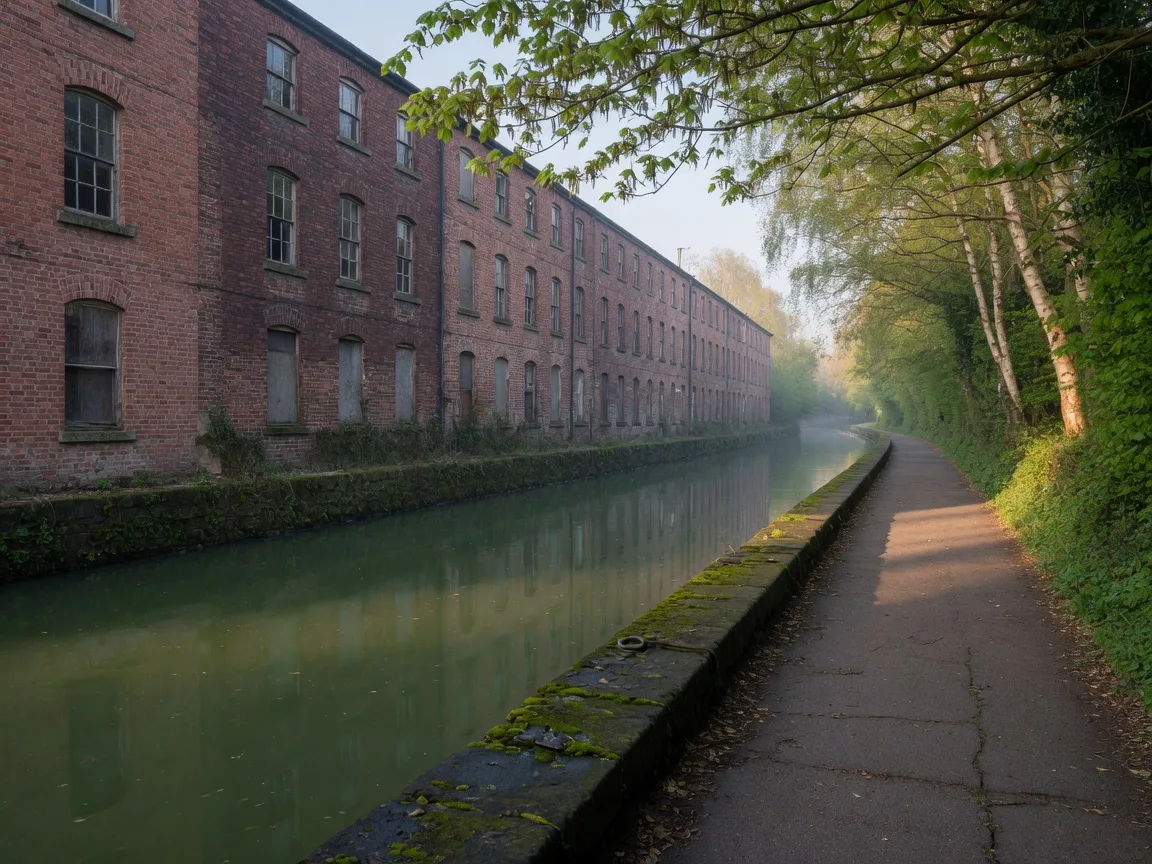
The honest living note
Every Augusta address sits in Richmond County, and the consolidated government means the city and county are one. The district descriptions on this page cover the character, but the school boundary, the commute, and the flood zone are address-specific facts to verify for the exact lot.
The living-in-Augusta checklistAround Augusta
Nearby, and labeled honestly
Augusta's daily geography crosses two states and three counties. Evans and Martinez are in Columbia County, Georgia; North Augusta is in Aiken County, South Carolina; and Aiken, Thomson, Waynesboro, and Harlem are the small cities on the roads out. Each is labeled with its real county and state so nothing reads as an Augusta neighborhood.
Evans
Columbia County, GeorgiaThe large west-side suburb on the Columbia County line, where much of the region’s newer retail and housing sits.
Martinez
Columbia County, GeorgiaThe west-side community on Washington Road, a shopping and dining corridor on the Columbia County side.
North Augusta
Aiken County, South CarolinaAcross the Savannah River: SRP Park and the GreenJackets, Brick Pond Park, and the Living History Park.
Aiken
Aiken County, South CarolinaThe horse-country city about 20 miles from downtown Augusta, known for its downtown, its parks, and its equestrian heritage.
Thomson
McDuffie County, GeorgiaThe small city on I-20 east of Augusta, the gateway to the fishing and lake country of the upper Savannah.
Waynesboro
Burke County, GeorgiaThe Burke County seat south of Augusta, the heart of the region’s agricultural country.
Harlem
Columbia County, GeorgiaThe small town on the way to Thomson, known as the birthplace of Oliver Hardy.
The Richmond County guide covers the county side of the story, and the full city index carries every covered Georgia city at its own address.
Augusta questions, answered
Straight answers about Augusta
What is Augusta, Georgia known for?
Augusta is known for the Masters Tournament at Augusta National, the Riverwalk along the Savannah River, the 1845 Augusta Canal, James Brown, and a medical and university district anchored by Augusta University and the region's hospitals.
What can you do in Augusta besides the Masters?
Walk the Riverwalk, tour the canal by boat or on foot, boardwalk Phinizy Swamp, and visit the museums: the Morris Museum of Art, the Augusta Museum of History, and the Lucy Craft Laney Museum of Black History. The things-to-do page carries the full list.
What are some free things to do in Augusta?
The Riverwalk, the canal towpath trails, Phinizy Swamp Nature Park, Sacred Heart Cultural Center on weekdays, and the Augusta Market on the River are all free. The parks page carries the list.
What can families do in Augusta?
Phinizy Swamp, the Augusta Museum of History, the canal boat tours, the Imagination Station children's museum, and GreenJackets baseball across the river in North Augusta, South Carolina.
Where can you explore outdoors in Augusta?
Phinizy Swamp Nature Park, the Augusta Canal towpath trails, and the Augusta Riverwalk are the three anchors, with neighborhood parks like Pendleton King and Brookfield spread across the county.
Is North Augusta in Georgia?
No. North Augusta is across the Savannah River in Aiken County, South Carolina. Evans and Martinez, by contrast, are in Columbia County, Georgia, on Augusta's west side.
Is Augusta National open to the public?
No. Augusta National Golf Club is a private, invitation-only club. The Masters is played there the first full week of April, and attendance is by advance ticket only through the official application process on masters.com.
What should you research before moving to Augusta?
The school attendance zone for the exact address through the Richmond County School System, the consolidated city-county government, the commute routes on I-20 and I-520, and the flood zone if you are looking near the river. The living-in-Augusta page carries the checklist.
Need a home pro?
Plumber, electrician, roofer, or HVAC in Augusta
For home services in Augusta, the guide points to HomeGuide, the matching service that connects homeowners with vetted local pros: plumbers, electricians, roofers, HVAC, painters, handymen, and landscaping. CityGuideGA stays a discovery site; the trades conversation happens on HomeGuide's Augusta page.
Powered by HomeGuide
Find a home pro in AugustaHomeGuide matches homeowners with vetted local pros in Augusta, GA. CityGuideGA and HomeGuide are separate services.
Augusta real estate
Thinking About Moving to Augusta?
Explore Augusta neighborhoods, homes, and the living conversation with local real-estate guidance from Rob Dietrich | eXp Realty. This guide stays an independent local discovery resource; the real-estate conversation happens separately, on Rob's own site.
Rob Dietrich, REALTOR® · Georgia Real Estate License #384162 · eXp Realty, LLC · Broker Office: 888-959-9461 · Equal Housing Opportunity. All real estate brokerage services are provided through eXp Realty, LLC.
Nearby CityGuideGA cities
Elsewhere on the guide
Augusta is the Historic Heartland anchor on CityGuideGA. Athens, about an hour and a half up the road, is the nearest covered city, and the full index carries every Georgia city at its own address.